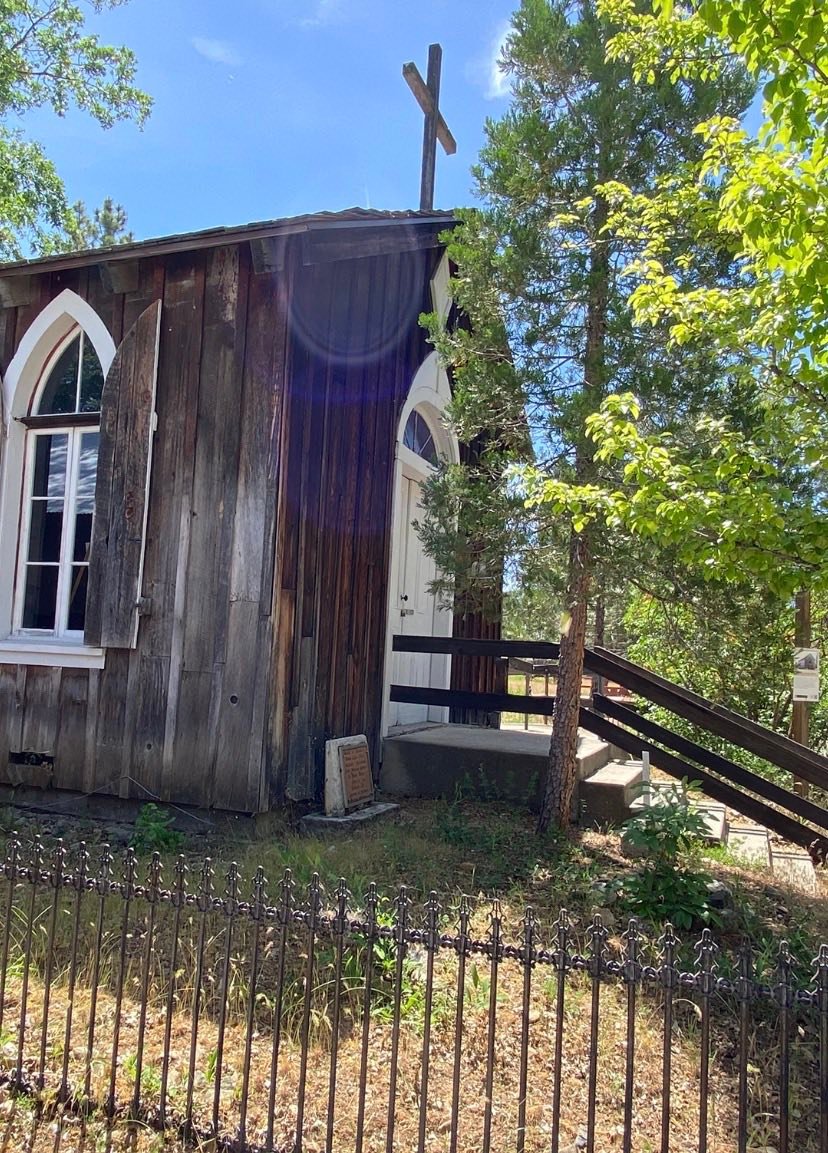
In the small town of Yreka, CA, at the Siskiyou County Museum, the outdoor exhibits feature an old pioneer church. There’s something truly special about these old churches. While we don’t have the grand cathedrals of Europe here in rural California, these rustic wooden structures stand as charming reminders of the people who came to this new land, built their lives, and brought their faith with them.
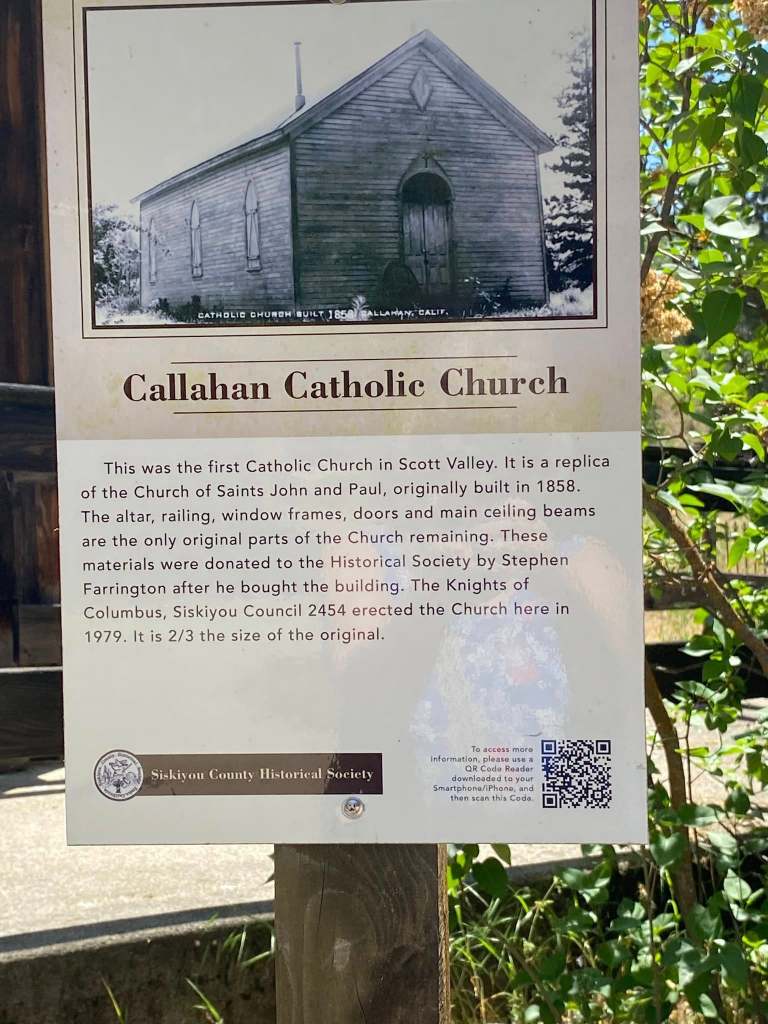
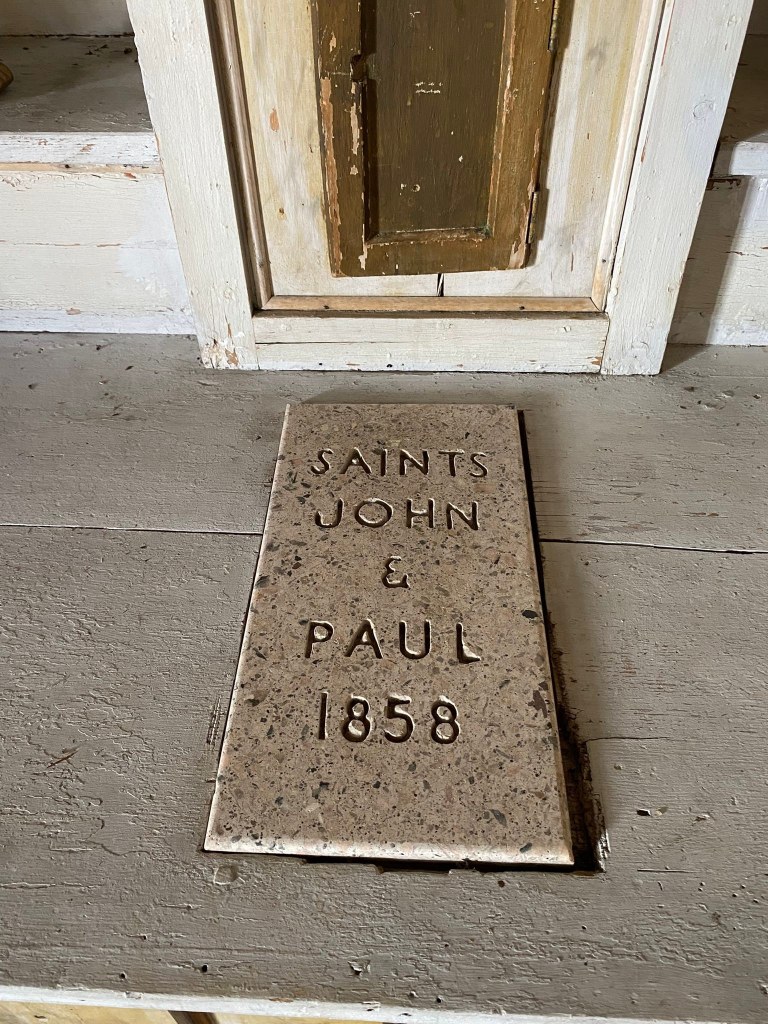
The first Catholic church in Scott Valley was the Callahan Catholic Church, also called the Church of Saints John and Paul, built in 1858 in the town of Callahan, Siskiyou County. Back in the early 1850s, there were no churches in the Callahan–Sawyers Bar area, so traveling missionaries like Father Thomas Cody and Father James Cassian would visit to serve the surrounding communities. They often took breaks at the Mathias Callahan ranch for rest and supplies.
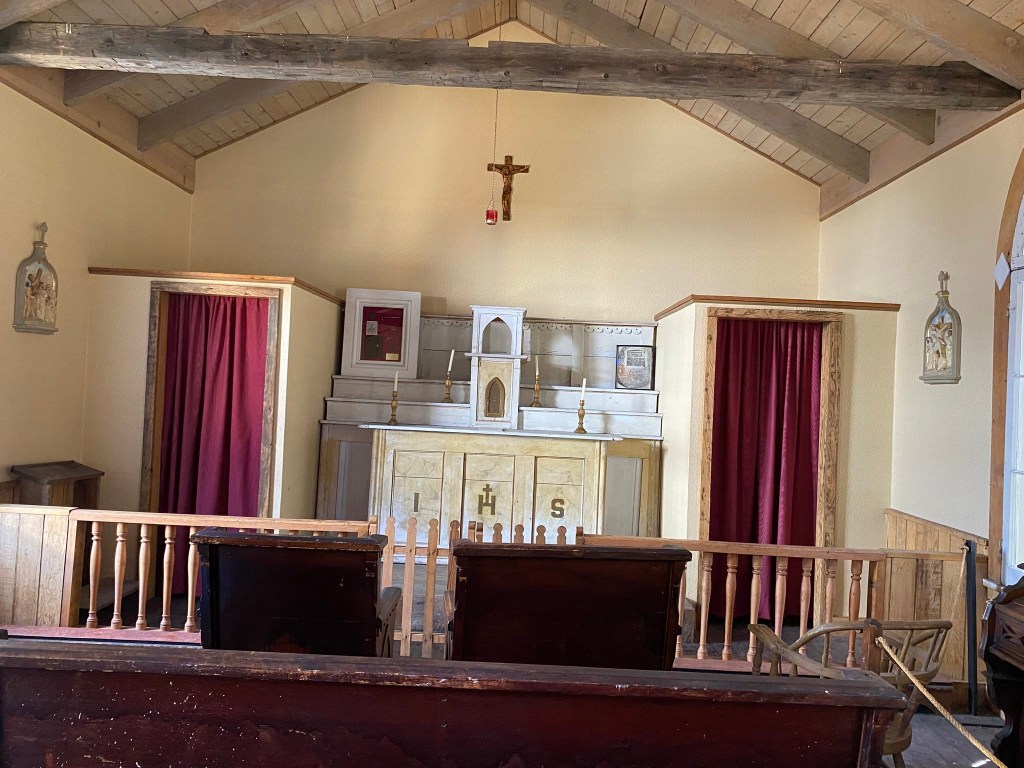
The original church was a modest structure, and today only a few original elements remain. The original altar, railing, window frames, doors, and main ceiling beams were donated by Stephen Farrington after he acquired the building.
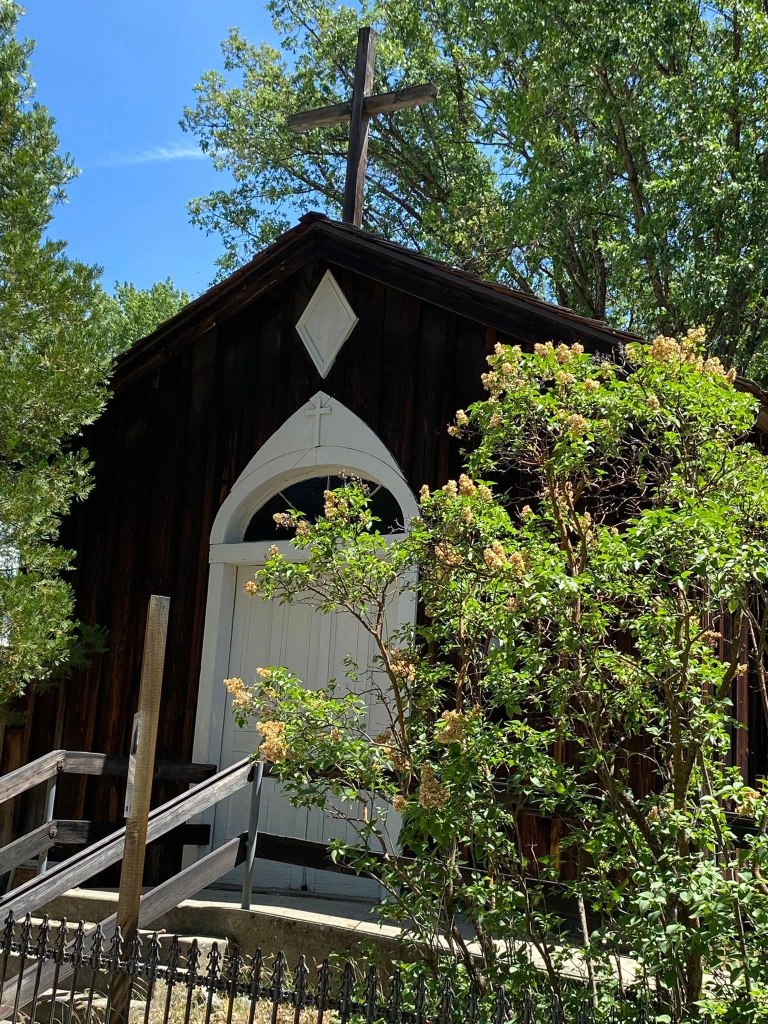
In 1979, the Knights of Columbus, Siskiyou Council 2454, erected a replica of the church at the Siskiyou County Historical Society Outdoor Museum in Scott Valley. The replica is about two-thirds the size of the original
In the 1800s, church life in far Northern California was shaped by both Indigenous spiritual traditions and the growing influence of European and American settlers. Long before settlers arrived, Native American tribes such as the Yurok, Shasta, and Chumash practiced rich spiritual traditions deeply tied to the land, storytelling, nature, and seasonal ceremonies.
In the early 1800s, Spanish missionaries established missions throughout California, introducing Roman Catholicism to the region. Over time, elements of Native spirituality and Catholic teaching blended together, creating unique forms of worship and community life.
The California Gold Rush of 1848–1855 brought a wave of settlers from the Midwest and beyond. As new towns sprang up, so did small Christian congregations. Many early churches began in homes or simple gathering places before eventually building modest wooden chapels. These churches often emphasized personal faith, Bible study, close-knit fellowship, and independence from larger denominations.
Finding an old rustic church from the 1800s is rare, especially with the challenging terrain and constant wildfire threats. The fact that the original altar, railing, window frames, doors, and main ceiling beams are still intact shows that there are people today dedicated to preserving the religious history of this area.
And I am grateful to them.

 From My Shasta Home
I always love hearing from you because your comments make this place feel like home.